












Dog Anxiety Guide

Introduction
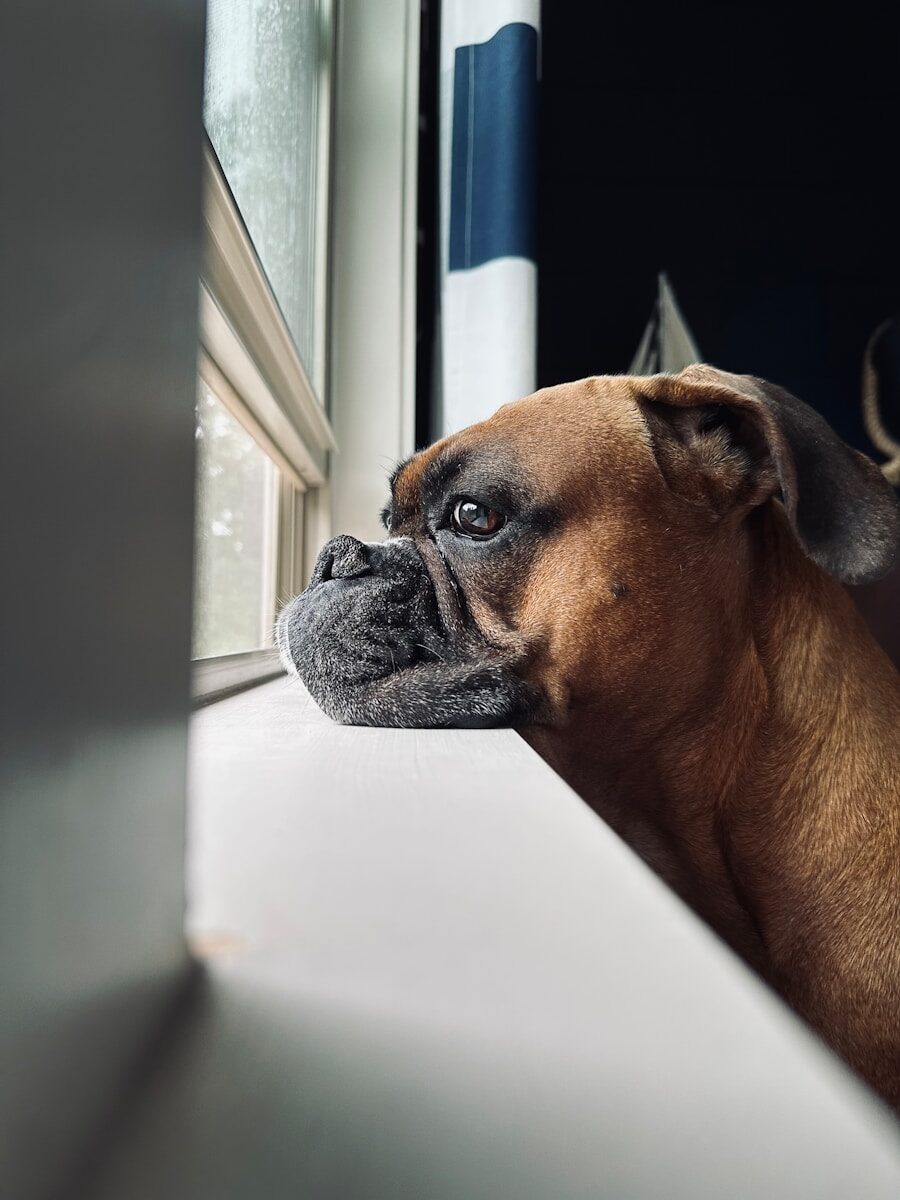
If your dog has been pacing, panting, or unable to settle, you’re not alone.
Most owners describe it the same way:
“Something feels off.”
What you’re seeing isn’t bad behavior.
It’s your dog trying to cope with an environment they don’t fully understand.
Understanding Dog Anxiety
Dogs don’t experience anxiety the way humans describe it.
They experience uncertainty.
A lack of predictability.
A feeling that something isn’t quite right.
This shows up in subtle ways at first—restlessness, increased attachment, alertness—before turning into more obvious behaviors like barking, destruction, or constant movement.
Common Causes of Anxiety in Dogs
In most cases, anxiety is not caused by a single event.
It builds over time through small, repeated patterns.
Changes in routine, inconsistent schedules, excess noise, or even the emotional state of the owner can all contribute.
Dogs are highly responsive to energy and environment.
When those feel unstable, they react.
Signs Your Dog May Be Struggling
Recognizing the signs early can prevent escalation.
Some of the most common indicators include:
- pacing or circling
- excessive barking
- inability to relax
- following you constantly
- heavy breathing or panting indoors
These are not random behaviors.
They are signals.
A Simple Treatment Approach
Addressing anxiety doesn’t require complexity.
It requires consistency.
Start by creating a predictable daily structure.
Feeding times, walks, and rest periods should happen at roughly the same time each day. This gives your dog a sense of control over their environment.
In addition, introducing short periods of intentional calm—without stimulation or distraction—can help reset their nervous system.
Even a few minutes of quiet presence can make a noticeable difference.
Supportive Tools That Can Help
While routine is the foundation, certain tools can support your dog as they adjust.
Calming chews, lick mats, and designated resting areas can provide outlets for nervous energy and encourage relaxation.
These should not be viewed as solutions on their own, but as part of a broader approach focused on stability and clarity.
(Insert product modules here)
What to Avoid
It’s important to avoid reacting to anxiety with more intensity.
Raising your voice, over-correcting, or introducing more stimulation can reinforce the very state you’re trying to reduce.
Instead, the goal is to lower the overall intensity of the environment.
Final Thoughts
Your dog doesn’t need a perfect routine.
They need a predictable one.
Small changes, applied consistently, will have a greater impact than any quick fix.
Over time, those changes create a space where your dog can finally settle.
Continue the Treatment
If your dog is dealing with specific issues like separation anxiety, overstimulation, or constant attachment, there are more targeted approaches available.
👉 Unlock the next treatment plan here
(EMAIL CAPTURE)
